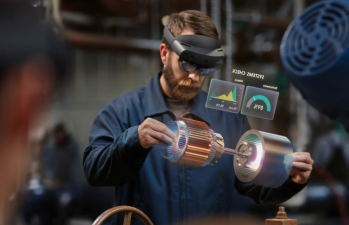
Spatial computing is a computing paradigm that integrates digital information with the physical world in real time, enabling machines to perceive, understand, and interact with three-dimensional space. Its core is the "virtual-real integration" and natural human-computer interaction (such as gestures, eye tracking, and voice), achieved through technologies such as AI, 3D reconstruction, SLAM, and XR (AR/VR/MR). Its importance lies in redefining human-computer interaction from a "two-dimensional screen" to "three-dimensional space," promoting screenless, contextualized, and immersive experiences. It improves efficiency and security in fields such as industrial inspection, medical surgery, smart cities, retail guidance, and education and training. Furthermore, as the underlying support for the metaverse and AI-based physical interaction, it is becoming a key cornerstone of the next generation of computing platforms after mobile computing.
What is Spatial Computing?
Spatial computing is one of the fundamental technologies of the metaverse. Initially, spatial computing referred to the technology of calculating and analyzing maps and other geographic location data to achieve positioning and measurement. In the past, it was mainly used in macroscopic fields such as the Global Positioning System (GPS) and Geographic Information System (GIS). With the development of technologies such as XR, virtual humans, and digital life, the demand for computing in microscopic space is gradually increasing. Now, when spatial computing is mentioned, it often refers to computing in microscopic space.
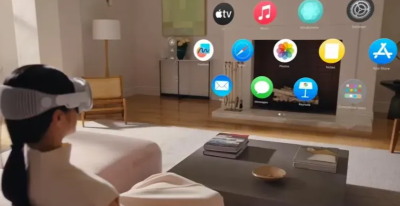
Unlike traditional desktop and mobile computing, spatial computing is not limited to the rectangular frame of a physical screen but can move freely within our surrounding environment. More natural input methods such as voice, vision, and gestures will further enrich traditional interaction modes such as mice, keyboards, and touchscreens, enabling people to access and interact in ways most suitable for their current scenario and business processes.
Core Technologies of Spatial Computing
Key technologies of spatial computing include 3D reconstruction, spatial perception, user perception, and spatial data management. From the perspective of computing carriers, spatial computing can be divided into edge computing, cloud computing, and cloud-edge-device collaborative computing with 5G as an important medium. Through spatial computing, seamless integration of people, objects, machines, and virtual space can be achieved, constructing digital life, creating a new economic form that blends the virtual and real, ultimately driving a new round of industrial revolution and promoting the development and implementation of industries related to the metaverse, such as XR.
What are the advantages of spatial computing?
Blending the Real and Virtual Worlds:
This technology facilitates a seamless integration of the physical and digital realms, providing users with contextual information to enhance their understanding of and interaction with these spaces.
Enhanced Collaboration:
It allows users to interact with and collaborate on digital objects within virtual environments, which is particularly beneficial for team-based activities and projects.
Training and Simulation:
Spatial computing enables safe and effective training simulations in hazardous or complex environments, making it a valuable tool in fields such as medicine, manufacturing, and architecture.
AI Integration:
By supporting advanced scene understanding with AI, spatial computing can be used to create immersive experiences that incorporate elements of our physical spaces to enhance the interactivity of virtual environments.
Using Familiar 2D Paradigms:
Spatial computing allows users to use familiar 2D computing paradigms, such as web browsers or other 2D windows, within 3D spaces. This makes the transition to spatial computing more intuitive and accessible.
Overall, these advantages make XR environments more interactive, immersive, and collaborative, greatly enriching the user experience.
Challenges of Spatial Computing
To deliver on the promise of spatial computing, developers need to overcome several challenges and practical issues:
High Computing Power: Spatial computing requires significant computing resources to process and render complex environments in real time, which can place high demands on current on-device hardware. NVIDIA GPUs and edge AI technologies can process massive datasets in real time, ensuring high-fidelity simulations and interactions. Technologies such as the NVIDIA Omniverse™ library and CloudXR™ leverage this computing power to seamlessly integrate high-fidelity rendering of large numbers of models into spatial computing applications, helping industries overcome hardware limitations.
Low Latency: Ensuring low latency is crucial for providing a seamless and responsive user experience. Any latency can undermine the immersion and effectiveness of spatial computing applications. NVIDIA addresses this challenge by deploying its GPUs across a wide range of environments, including cloud service providers (CSPs), on-premises infrastructure, and edge devices. This widespread deployment ensures data processing is closer to the user, minimizing latency and providing the smooth, real-time interaction necessary for spatial computing applications.
AI Integration: Integrating AI to accurately understand and contextualize user environments is challenging, but it helps create responsive and adaptable virtual spaces. NVIDIA simplifies this process with platforms like NVIDIA Isaac™ and Metropolis (NIM) designed to streamline AI integration for spatial computing applications. These solutions provide pre-built AI models and toolkits optimized for real-time contextual understanding, enabling developers to easily create intelligent systems that adapt to user interactions and changing environments.
Realistic and Immersive Experiences: Creating realistic and immersive experiences requires advanced graphics. This involves complex software and hardware capabilities. NVIDIA addresses this with its industry-leading RTX™ GPUs, which support real-time ray tracing and AI-enhanced rendering to produce lifelike visuals. Combined with technologies like the NVIDIA Omniverse library, developers can leverage powerful tools to create realistic simulations and interactive environments. These solutions ensure that spatial computing applications deliver unparalleled realism and immersion across industries.